Intakes in Switzerland 2027: deadlines, universities, and requirements
Summarise or discuss this with AI
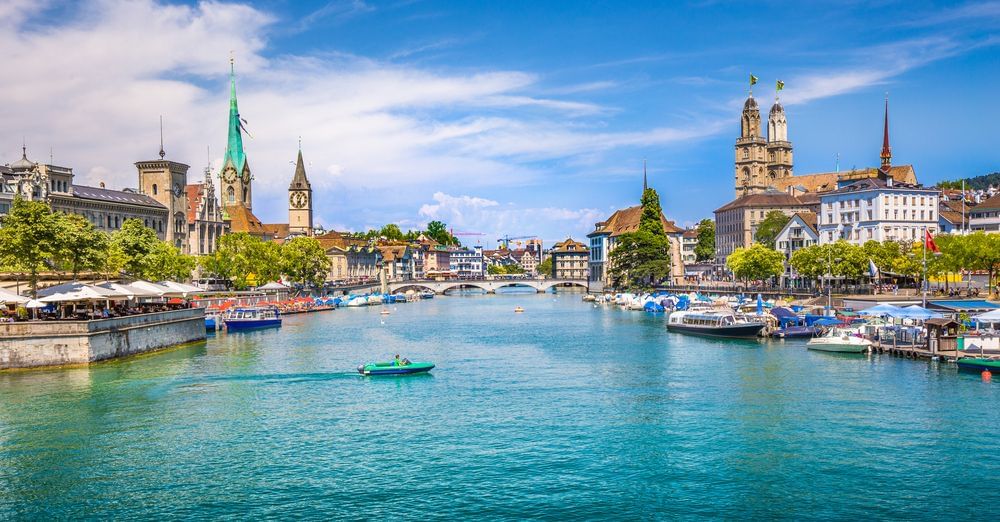
Switzerland offers two main academic intakes: the primary fall intake (September) and the secondary spring intake (February). For the fall 2027 intake, standard applications close between February and April 2027, but elite institutions like ETH Zurich and EPFL close their international applications extremely early (November to December 2026).
For the spring 2027 intake, applications generally close between September and November 2026. Interested to learn about higher education and the academic intakes in Switzerland? Scroll down for insights.
Want to learn more about intakes in Switzerland? Talk to our experts.
Key takeaways
- Swiss universities primarily offer two intakes: fall and spring. The fall intake is most popular due to the availability of more academic programmes and scholarship options. The spring intake offers a smaller number of academic programmes and limited scholarships.
- The spring intake is an excellent alternative if you miss the fall intake. The level of competition is generally lower for the spring intake compared to the fall.
- Fall intake provides vibrant campuses and extensive networking opportunities, while spring intake provides smaller class sizes and personalised attention.
- Make sure you are well-prepared and submit your applications early, within the deadlines, for your chosen intake. You should also apply for your student visa on time to avoid any delays.
Switzerland is known for its high-quality universities and attracts students from all over the world. Understanding the intakes is important to plan your application timeline and secure your place in the desired programme.
In this article, we’ll guide you through the major academic intakes in Switzerland so you can choose the right one and meet deadlines comfortably. Keep reading!
Table of Contents
- Overview of the Swiss education system
- Types of intakes in Switzerland for international students 2027
- Comparison between different intakes in Switzerland 2027
- Popular Swiss universities and their intake cycles
- Scholarship availability by intake
- Essential 2026/2027 Type D visa and financial requirements
- Tips for preparing applications in advance
- Final thoughts
- Frequently asked questions
- What are the typical intake months for Swiss universities?
- Can international students apply for both fall and spring intakes?
- How far in advance should I prepare my documents?
- Do all Swiss universities offer a summer intake?
- How does the intake affect visa processing time?
- Are scholarships available for both intakes?
- When is the absolute deadline for the fall 2027 intake in Switzerland?
- How much money do you need to show for a Swiss student visa in 2027?
- What is the difference between a Type D visa and a B Permit?
- Are there any English-taught bachelor's programmes in Switzerland?
- Can you work part-time while studying during your Swiss intake?
Overview of the Swiss education system
Switzerland’s education system has three levels: primary, secondary, and tertiary. Primary education covers ages 4 to 11, secondary education covers ages 12 to 19, and tertiary education covers ages 19 to 24.
The tertiary level includes two Federal Institutes of Technology, cantonal universities, and universities of applied sciences. Higher education leads to bachelor’s, master’s, and doctorate degrees. A bachelor’s degree usually lasts three years, while a master’s takes one-and-a-half to two years.
Types of intakes in Switzerland for international students 2027
When planning to study in Switzerland, it’s important to know the intakes offered. Swiss universities generally have two main intakes:
Fall intake (September) 2027
The fall intake is the main intake, with admissions starting between August and September. Most programmes are available during this intake, along with more scholarship options. Popular courses include Finance, Engineering, Business, and Social Sciences.
Applying in the fall gives you access to a wide range of programmes and a lively campus environment. With more students on campus, you can network and participate in extracurricular activities that enhance your overall experience.
Fall intake is ideal for a smooth transition to university life, with well-organised orientation programmes and activities that help you adapt to your new environment.
Spring intake (February) 2027
The spring intake is an alternative if you miss the fall intake. Fewer programmes are available – around 30% of courses – including Management, Nursing, and IT. Admissions usually begin in February, with lower competition.
Applying in the spring gives you more time to prepare. Smaller class sizes allow for more personalised attention. Some postgraduate programmes are also only available in the spring semester.
Spring intake offers smaller classes, individualised attention, and access to certain programmes not available in fall.
Comparison between different intakes in Switzerland 2027
Here’s a quick comparison of the fall and spring intakes:
| Aspect | Fall intake | Spring intake |
|---|---|---|
| Programme starting month | September or October | February or March |
| Application deadlines | February–April | September–November |
| Course availability | Most programmes available | Limited programmes |
| Class size | Larger classes | Smaller classes, more personalised |
| Scholarship opportunities | More options, competitive | Fewer options, less competitive |
| Application volume | High, more competitive | Lower, less crowded |
| Admission process | Highly competitive | Less competitive, relaxed deadlines |
| Benefits | Wide course selection, vibrant campus | Quieter, easier admission, flexible |
Popular Swiss universities and their intake cycles
Knowing the intake cycles of major universities helps you plan applications and scholarships. Some examples:
| University | Fall intake (deadline) | Spring intake (deadline) | Courses offered |
|---|---|---|---|
| ETH Zurich | March | November | Engineering, Computer Science, Technology |
| EPFL | March / December | No spring intake | Science, Technology, Engineering |
| University of Geneva | February | January | Law, Business, Arts, Social Sciences |
| University of Basel | April | January | Biomedical Science, Pharmacy |
| University of Zurich | April | November | Medicine, Economics, Law, Arts |
Few other universities are,
- EU Business School
- BHMS Business and Hotel Management School
- Helvetic Business School
- HTMi - International Hotel and Tourism Institute (Switzerland)
- Swiss Hotel Management School
- Culinary Arts Academy Switzerland
- Cesar Ritz Colleges
- HIM Business School
- American Institute of Applied Sciences in Switzerland
Related articles


Scholarship availability by intake
Fall intake generally offers more scholarships due to higher programme availability.
Spring intake has fewer programmes and financial aid options, but the competition is lower. Scholarships may cover tuition, accommodation, travel, and other expenses.
Essential 2026/2027 Type D visa and financial requirements
The Swiss immigration process is highly decentralised and strictly regulated by individual cantons. You must ensure your application complies with these regulations to avoid visa rejection.
- Updated proof of funds: To secure your National Type D student visa, you must prove you have access to a minimum of CHF 21,000 per year (roughly CHF 1,750 per month) for living expenses.
- Strict FINMA banking rules: The Swiss Financial Market Supervisory Authority (FINMA) monitors visa financial documents strictly. You must show a consistent financial history; sudden, unexplained large deposits into your account will often trigger anti-money laundering flags and lead to immediate visa refusal.
- The mandatory B Permit registration: Your Type D visa only grants you entry into Switzerland. Within 14 days of your arrival, you must register at your local commune (Einwohnerkontrolle) to convert your visa into a biometric B Permit (residence permit).
Tips for preparing applications in advance
Start preparation 12 - 18 months before your intake. Identify suitable universities and programmes, review admission requirements, and prepare for language and competitive exams such as GMAT or GRE. Submit applications 6 - 9 months ahead, and apply for scholarships and accommodation early.
Final thoughts
Switzerland offers two main intakes: fall and spring. Fall intake is more popular and widely available, while spring intake is limited but flexible. Choose an intake that aligns with your programme, scholarship needs, and career goals.
Got questions about intakes in Switzerland? Connect with us!
Frequently asked questions
What are the typical intake months for Swiss universities?
Fall intake begins in September/October, and spring intake begins in February/March.
Can international students apply for both fall and spring intakes?
Yes, you can apply for both intakes, but ensure deadlines and requirements are managed carefully.
How far in advance should I prepare my documents?
Start preparing 10 - 12 months before the intake. Submit your applications 1 - 2 months before the deadline for a smoother process.
Do all Swiss universities offer a summer intake?
No, most offer only fall and spring intakes. Summer programmes are limited to short courses, research, or language programmes.
How does the intake affect visa processing time?
Fall intake has higher application volume, which may lengthen visa processing. Spring intake typically has faster processing due to lower volume.
Are scholarships available for both intakes?
Yes, but fall intake offers more scholarships compared to spring intake.
When is the absolute deadline for the fall 2027 intake in Switzerland?
The general deadline for most Swiss cantonal universities falls between February and April 2027. However, if you are an international non-EU student applying to top-tier institutions like ETH Zurich or EPFL, you face extremely strict early deadlines closing between 30 November and 15 December 2026. Missing these early winter deadlines means you will be locked out of those elite programmes until the following year.
How much money do you need to show for a Swiss student visa in 2027?
To meet the strict cantonal immigration requirements, you must prove you possess at least CHF 21,000 for your annual living expenses. This money must be held in a recognised bank account in your name or your financial sponsor's name, accompanied by clear bank statements showing consistent financial history. We help you audit these documents to ensure they do not trigger Swiss anti-fraud reviews.
What is the difference between a Type D visa and a B Permit?
The National Type D visa is an entry clearance document placed in your passport that legally allows you to travel to Switzerland for long-term study. However, it is not a residence permit. Once you arrive in Switzerland, you have a strict 14-day window to visit your local commune and exchange your Type D visa for a biometric B Permit, which serves as your official Swiss ID card.
Are there any English-taught bachelor's programmes in Switzerland?
While Switzerland offers hundreds of English-taught master's degrees, English-taught bachelor's programmes are relatively rare at traditional cantonal universities. Most undergraduate degrees require proficiency in the local cantonal language (German, French, or Italian). However, you can find excellent English-taught bachelor's options at Swiss universities of applied sciences and private hospitality schools.
Can you work part-time while studying during your Swiss intake?
Yes, as an international non-EU student, you are legally permitted to work up to 15 hours per week during the standard academic semester. During official university holidays, you are allowed to work full-time hours (up to 40 hours per week). However, Swiss law strictly dictates that you can only begin working six months after your academic programme officially starts.
Tags:
Written By

Study Abroad Expert
Reviewed by

Study Abroad Expert
Disclaimer: The views and opinions shared in this site solely belong to the individual authors and do not necessarily represent the